

Live challenge on Zoom.
January 17 & 18, 2026.
Live challenge on Zoom. January 17 & 18, 2026.
10 AM New York | 12 PM Brasilia | 3 PM London
Recording will be available after
How to systematically find research ideas that get cited in medical guidelines.
Learn 5 methods that work regardless of your previous research experience, medical training stage, or specialty of interest. These ideas can be executed anywhere in the world with zero institutional support, funding, or ethics committee approval.
These are the same methods behind publications from our students in journals like JAMA, The Lancet, Circulation…


This 2-day challenge can change your medical career forever. Do you accept the challenge?
The Medical Research Hackathon IS FOR YOU even if:
● Medical school taught you nothing about conducting impactful research
● You struggle to find mentors or a research group
● You have no institutional support
● You have zero research experience
● Statistics scares you
● You don’t feel confident about reading research papers yet
● Medical school taught you nothing about conducting impactful research
● You struggle to find mentors or a research group
● You have no institutional support
● You have zero research experience
● Statistics scares you
● You don’t feel confident about reading research papers yet
DON’T JOIN THE MEDICAL RESEARCH HACKATHON IF
● You expect to make no effort
● You’re seeking a service that guarantees publications - this is not what we stand for, as this is an unethical practice
● You expect to learn complicated statistics
● You’re a former student of the Meta-Analysis Academy
● You expect to make no effort
● You’re seeking a service that guarantees publications - this is not what we stand for, as this is an unethical practice
● You expect to learn complicated statistics
● You’re a former student of the Meta-Analysis Academy
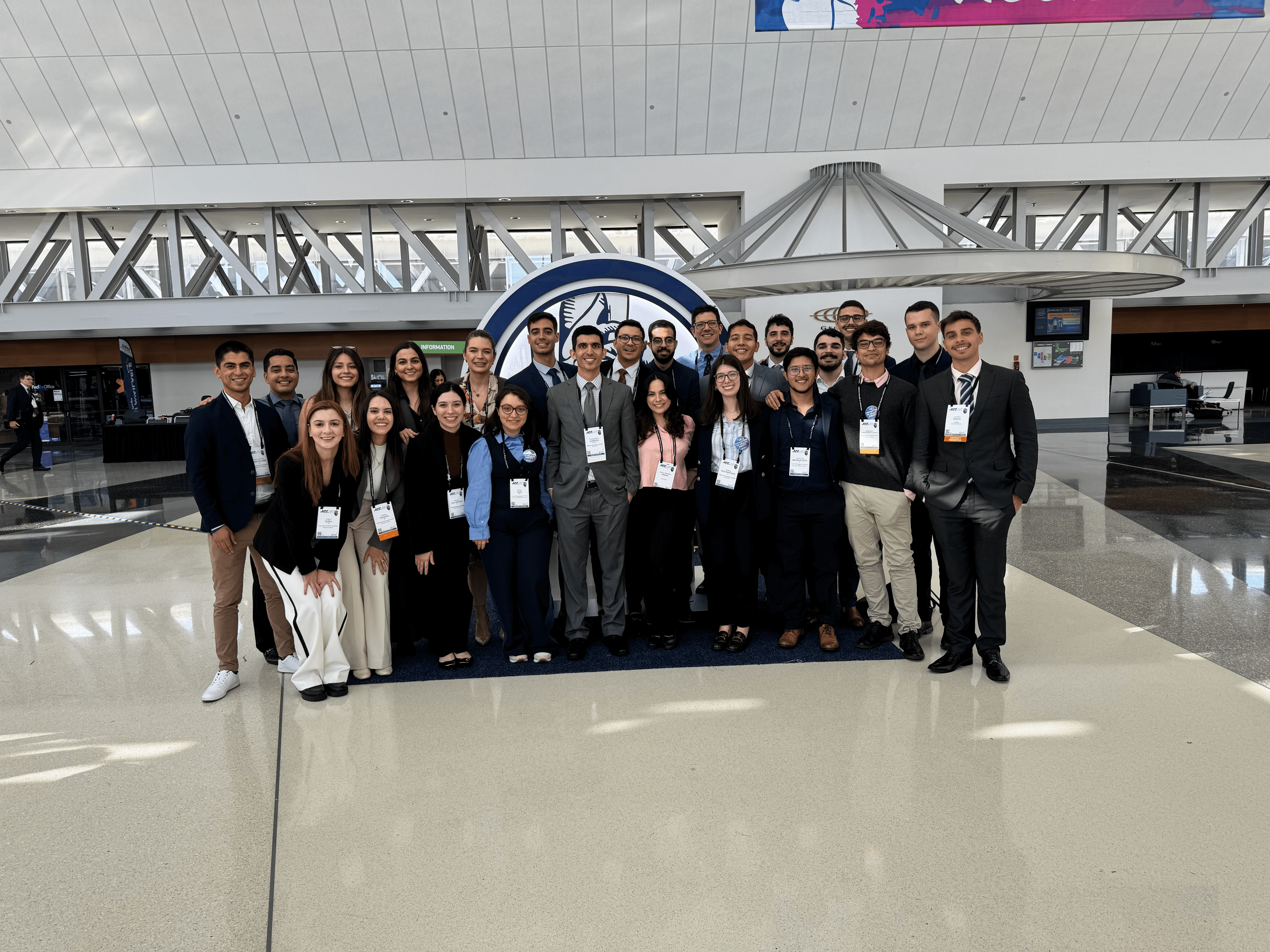
FEEDBACK FROM OUR LAST EDITION


HOW WILL THE MEDICAL RESEARCH HACKATHON WORK
Before the Hackathon (Pre-Work)
Complete preparatory lessons available on the Student Portal:
- Introduction Module: Study designs, publication types, and meta-analysis fundamentals
- Lesson 1: Learn 5 powerful strategies to generate research ideas
- Lab Exercise 1: Apply what you learned before the live event
- Introduction Module: Study designs, publication types, and meta-analysis fundamentals
- Lesson 1: Learn 5 powerful strategies to generate research ideas
- Lab Exercise 1: Apply what you learned before the live event
Fill out the Research Group Interest Form so we can match you with the perfect team based on your interests, training level, and location.
Day 1: Saturday, January 17, 2026 (10:00 AM New York time)
Day 1: Saturday, January 17,
2026 (10:00 AM New York time)
Day 1: Saturday, January 17,
2026 (10:00 AM New York time)
Live Session: Dr. Rhanderson Cardoso will walk through Lab Exercise 1 solutions and teach you how to build a powerful PICOTT question.
Team Formation: By noon, you’ll receive your team assignment—carefully curated groups of 3-5 people matched by specialty interest and background.
Hackathon Intensive: Work collaboratively with your team throughout the afternoon to develop a publication-worthy research question. Expert tutors will be available for live guidance.
Deadline: Submit your group’s research proposal by 11:59 PM (New York time).
Live Session: Dr. Rhanderson Cardoso will walk through Lab Exercise 1 solutions and teach you how to build a powerful PICOTT question.
Team Formation: By noon, you’ll receive your team assignment—carefully curated groups of 3-5 people matched by specialty interest and background.
Hackathon Intensive: Work collaboratively with your team throughout the afternoon to develop a publication-worthy research question. Expert tutors will be available for live guidance.
Deadline: Submit your group’s research proposal by 11:59 PM (New York time).
Day 2: Sunday, January 18, 2026 (10:00 AM New York time)
Day 2: Sunday, January 18,
2026 (10:00 AM New York time)
Day 1: Saturday, January 17,
2026 (10:00 AM New York time)
Personalized Feedback: Receive expert commentary on your group’s submission.
Live Session: Review winning examples, solve Lab Exercise 2 together, and learn about AI in research.
Top 3 Announcement: The best projects will be selected for live pitching.
Live Pitches: Finalist teams present their research proposals to a panel of judges (3 minutes each).
Awards Ceremony: Winners announced + prize draw for Social Media Challenge participants.
Personalized Feedback: Receive expert commentary on your group’s submission.
Live Session: Review winning examples, solve Lab Exercise 2 together, and learn about AI in research.
Top 3 Announcement: The best projects will be selected for live pitching.
Live Pitches: Finalist teams present their research proposals to a panel of judges (3 minutes each).
Awards Ceremony: Winners announced + prize draw for Social Media Challenge participants.
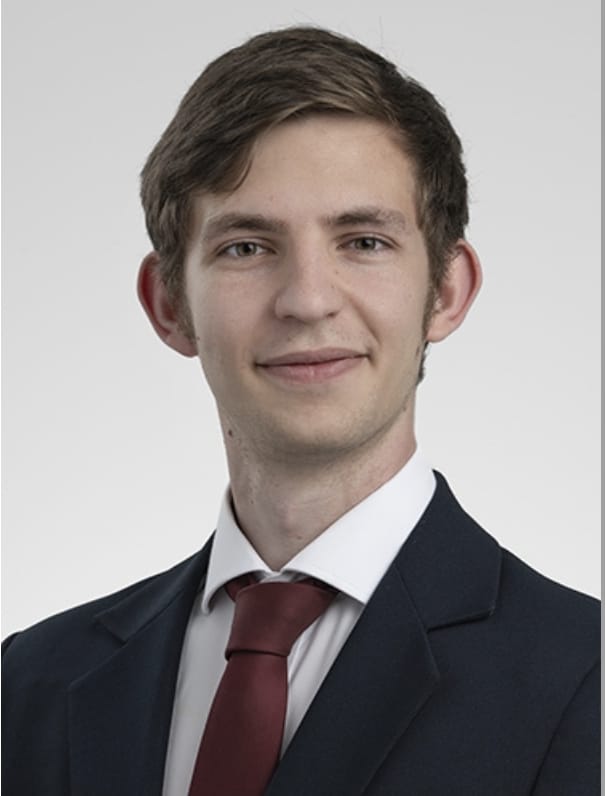
HE ACCEPTED THE CHALLENGE AND THIS IS WHAT HAPPENED


ANTHONY NAVARRETE RIOS
July 2025
July 2025
WINNER OF THE HACKATHON COMPETITION
PRESENTED HIS PROJECT AT THE ANNUAL MEETING OF THE AMERICAN SOCIETY OF HEMATOLOGY
December 2025
December 2025

Raise your hand if…
You’ve tried everything. Cold emailing, approaching mentors at your university, networking at international conferences. The result? Countless closed doors.
You blame yourself for not being good enough. You feel like you’re getting left behind.
You might need publications to secure a competitive position—a residency in the US, a scholarship for a master’s degree or PhD… but no matter how hard you try, it feels like it will take forever before you accomplish that.
I’ve been there too. During my PGY-1 in internal medicine at the University of Miami, I was following the same pathway. Don’t get me wrong—I was at a great institution, but even there, this pathway still led to closed doors.
Raise your hand if…
You’ve tried everything. Cold emailing, approaching mentors at your university, networking at international conferences. The result? Countless closed doors.
You blame yourself for not being good enough. You feel like you’re getting left behind.
You might need publications to secure a competitive position—a residency in the US, a scholarship for a master’s degree or PhD… but no matter how hard you try, it feels like it will take forever before you accomplish that.
I’ve been there too. During my PGY-1 in internal medicine at the University of Miami, I was following the same pathway. Don’t get me wrong—I was at a great institution, but even there, this pathway still led to closed doors.
It wasn’t until I discovered methods that gave me what you might not even understand yet—how powerful it is: AUTONOMY.
Autonomy to stop waiting on mentors.
Autonomy to pick your senior authors, the journal you’ll publish in, the number of projects you’ll participate in.
Autonomy means the only obstacle you’ll have is yourself—not the institution you’re at, ethics committee approval, or funding.
And this is why we created this CHALLENGE.
Raise your hand if…
You’ve tried everything. Cold emailing, approaching mentors at your university, networking at international conferences. The result? Countless closed doors.
You blame yourself for not being good enough. You feel like you’re getting left behind.
You might need publications to secure a competitive position—a residency in the US, a scholarship for a master’s degree or PhD… but no matter how hard you try, it feels like it will take forever before you accomplish that.
I’ve been there too. During my PGY-1 in internal medicine at the University of Miami, I was following the same pathway. Don’t get me wrong—I was at a great institution, but even there, this pathway still led to closed doors.
20+ Publications
before fellowship
application
Cardiology fellowship match
at Johns Hopkins Hospital
A Faculty position
at Harvard Medical School
CITATIONS IN CLINICAL GUIDELINES
ISSUED BY INTERNATIONAL MEDICAL SOCIETIES
It wasn’t until I discovered methods that gave me what you might not even understand yet—how powerful it is: AUTONOMY.
Autonomy to stop waiting on mentors.
Autonomy to pick your senior authors, the journal you’ll publish in, the number of projects you’ll participate in.
Autonomy means the only obstacle you’ll have is yourself—not the institution you’re at, ethics committee approval, or funding.
And this is why we created this CHALLENGE.

The challenge is to prove to you that even within a short period of two days, the advancement you can make by using systematic approaches to research will feel unlike anything you’ve ever tried before.
It’s a paradigm shift.
But be warned—after the Hackathon, you’ll have one regret:
Having more ideas than time to develop them.
You’ll start finding impactful ideas everywhere you look: in the hospital, at conferences, in newsletters, on podcasts. That’s the power of having a systematic approach—you’ll know with confidence that you’re looking in the right places.
And why should I care about finding good research ideas?
Rhanderson Cardoso Roadmap
20+ Publications
before fellowship
application
Cardiology fellowship match
at Johns Hopkins Hospital
A Faculty position
at Harvard Medical School
CITATIONS IN CLINICAL GUIDELINES
ISSUED BY INTERNATIONAL MEDICAL SOCIETIES


Rhanderson Cardoso Roadmap
20+ Publications
before fellowship
application
Cardiology fellowship match
at Johns Hopkins Hospital
A Faculty position
at Harvard Medical School
CITATIONS IN CLINICAL GUIDELINES
ISSUED BY INTERNATIONAL MEDICAL SOCIETIES


Because that’s the step 90% of new researchers fail—big time.
The result? Never getting published. And here’s why:
Most research ideas are DOA — Dead On Arrival.
In US politics, when the minority party proposes a bill that conflicts with the priorities of the party in power, we say that bill is DOA (Dead on Arrival).
DOA means the proposal is known to be rejected before the debate even begins.
The same happens in research: many papers are DOA.
The first step of any impactful research begins with the IDEA. The idea must answer a question that matters to the field.
Starting with the wrong idea = DOA.
And here’s the brutal truth: Even with flawless methods, brilliant statistics, and perfect writing—if the topic isn’t of interest, relevant, or feasible, high-impact journals won’t publish it.
I’ve seen many medical students or residents spend 2+ years in research and still never publish. Or worse…
Many panic and pay predatory journals abusive fees just to get ANY publication.
But you can avoid this completely.
There’s a systematic approach to finding strong, publication-worthy ideas that high-impact journals actually want.
Most researchers miss this: The best ideas come from finding controversy.
They’re not buried secrets, but open debates in newsletters, guidelines, and conferences.
The beauty of systematic methods? Once you learn them, you’ll spot ideas everywhere:
● In hospital rounds when two attendings disagree
● At conferences when speakers present conflicting data
● In newsletters highlighting new guidelines
● On podcasts discussing emerging treatments
After the Hackathon, you’ll have two regrets:
Not learning this sooner
Having more relevant ideas than time to perform them all
Don’t waste your time on DOA projects.
Do you accept the challenge?
And how much is it?
How much do you think it’s worth to have:
- Expert feedback on your group’s idea from experienced researchers
- A chance to win real prizes (including spots in the Meta-Analysis Academy)
- Intensive support and live classes with Dr. Cardoso to master a skill that can change your career forever
- Being paired in a group to collaborate with international professionals in your specialty of interest
- Access to all recorded sessions, exercises, and resources
How much do you think it’s worth to have:
- Expert feedback on your group’s idea from experienced researchers
- A chance to win real prizes (including spots in the Meta-Analysis Academy)
- Intensive support and live classes with Dr. Cardoso to master a skill that can change your career forever
- Being paired in a group to collaborate with international professionals in your specialty of interest
- Access to all recorded sessions, exercises, and resources
$37
$37
This challenge could easily cost $197 USD, but to make it accessible to medical professionals worldwide, you can enroll now for:
This price is only available for a limited time. As spots fill up, the price will increase.
KNOW OUR STUDENTS’ RESULTS

Igor Vinicius et al.
Award at the 25th EFORT Annual Congress. European Orthopedics Conference in Germany.

Dilson Pimentel et al.
Award at the VEITH Symposium 2024.

Pedro Bregion et al.
Winner of the Travel Grant Award at Obesity Week 2024.

Natália Milioli et al.
Winner of the National Scholar Award at the 32nd United European Gastroenterology Week.

Luis Felipe Leite et al.
Received the Conquer Cancer Award at the 2025 ASCO Gastrointestinal Cancers Symposium.

Rafael Ayala et al.
Meta-analysis cited in the EACTS/EACTAIC/EBCP Guidelines on Cardiopulmonary Bypass in Adult Cardiac Surgery.

Isabella Michelon et al.
Meta-analysis cited by Dana-Farber’s Breast Oncology Center.

Stefano Baraldo et al.
Awarded at ENDO 2024 – World Congress of GI Endoscopy.

Amanda Godoi et al. e Rafael Morgado et al.
Meta-analyses cited by the American Diabetes Association in the Standards of Care in Diabetes – 2025 guidelines.

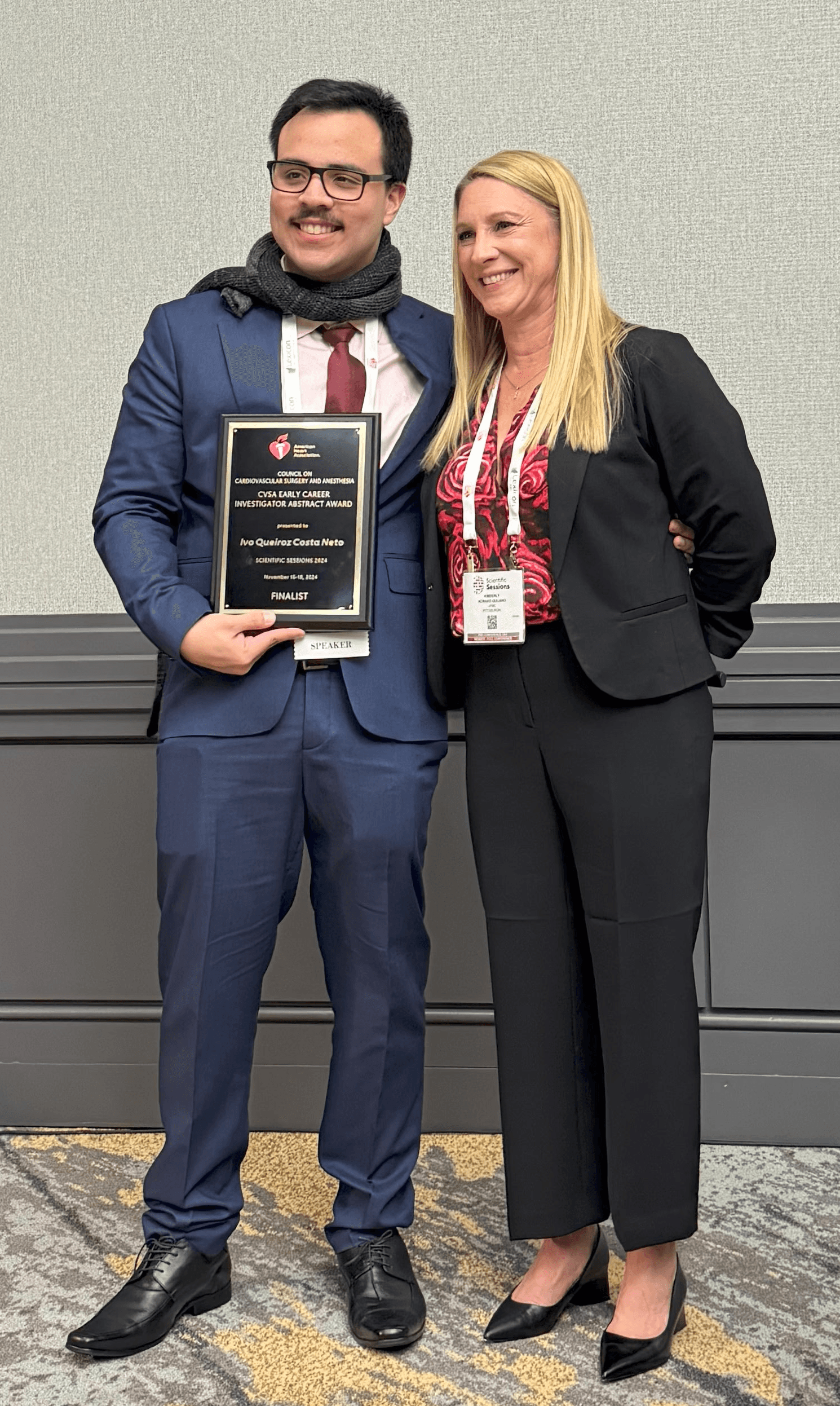
Ivo Queiroz et al.
Winner of the Council on Cardiovascular Surgery and Anesthesia Early Career Investigator Award at the American Heart Association 2024.

Sara Amaral et al.
Winner of the Best Abstract Award at the World Congress of Regional Anesthesia and Pain, in Paris, France.

Cynthia Florencio et al.
Meta-analysis cited on UpToDate.

Catalina Herrán Fonseca et al.
Winner of the ASH-BSH Abstract Achievement Award.

Esteban Rodriguez et al.
Winner of the Paul Dudley White International Scholar Award at the American Heart Association.

Igor Vinicius et al.
Award at the 25th EFORT Annual Congress. European Orthopedics Conference in Germany.

Dilson Pimentel et al.
Award at the VEITH Symposium 2024.

Pedro Bregion et al.
Winner of the Travel Grant Award at Obesity Week 2024.

Natália Milioli et al.
Winner of the National Scholar Award at the 32nd United European Gastroenterology Week.

Luis Felipe Leite et al.
Received the Conquer Cancer Award at the 2025 ASCO Gastrointestinal Cancers Symposium.

Rafael Ayala et al.
Meta-analysis cited in the EACTS/EACTAIC/EBCP Guidelines on Cardiopulmonary Bypass in Adult Cardiac Surgery.

Isabella Michelon et al.
Meta-analysis cited by Dana-Farber’s Breast Oncology Center.

Stefano Baraldo et al.
Awarded at ENDO 2024 – World Congress of GI Endoscopy.

Amanda Godoi et al. e Rafael Morgado et al.
Meta-analyses cited by the American Diabetes Association in the Standards of Care in Diabetes – 2025 guidelines.

Ivo Queiroz et al.
Winner of the Council on Cardiovascular Surgery and Anesthesia Early Career Investigator Award at the American Heart Association 2024.

Sara Amaral et al.
Winner of the Best Abstract Award at the World Congress of Regional Anesthesia and Pain, in Paris, France.

Cynthia Florencio et al.
Meta-analysis cited on UpToDate.

Catalina Herrán Fonseca et al.
Winner of the ASH-BSH Abstract Achievement Award.

Esteban Rodriguez et al.
Winner of the Paul Dudley White International Scholar Award at the American Heart Association.
KNOW OUR STUDENTS’ RESULTS
Aqui é aquele carrossel padrão | remover esse comentario